
Why Outdated Content Hurts Your SEO (And What To Do About It)
Learn how outdated statistics, prices, and facts in your content can damage your search rankings and credibility, and how to fix it efficiently.

Richard Roth
Founder & SEO Strategist
May 26, 2026
6 min read
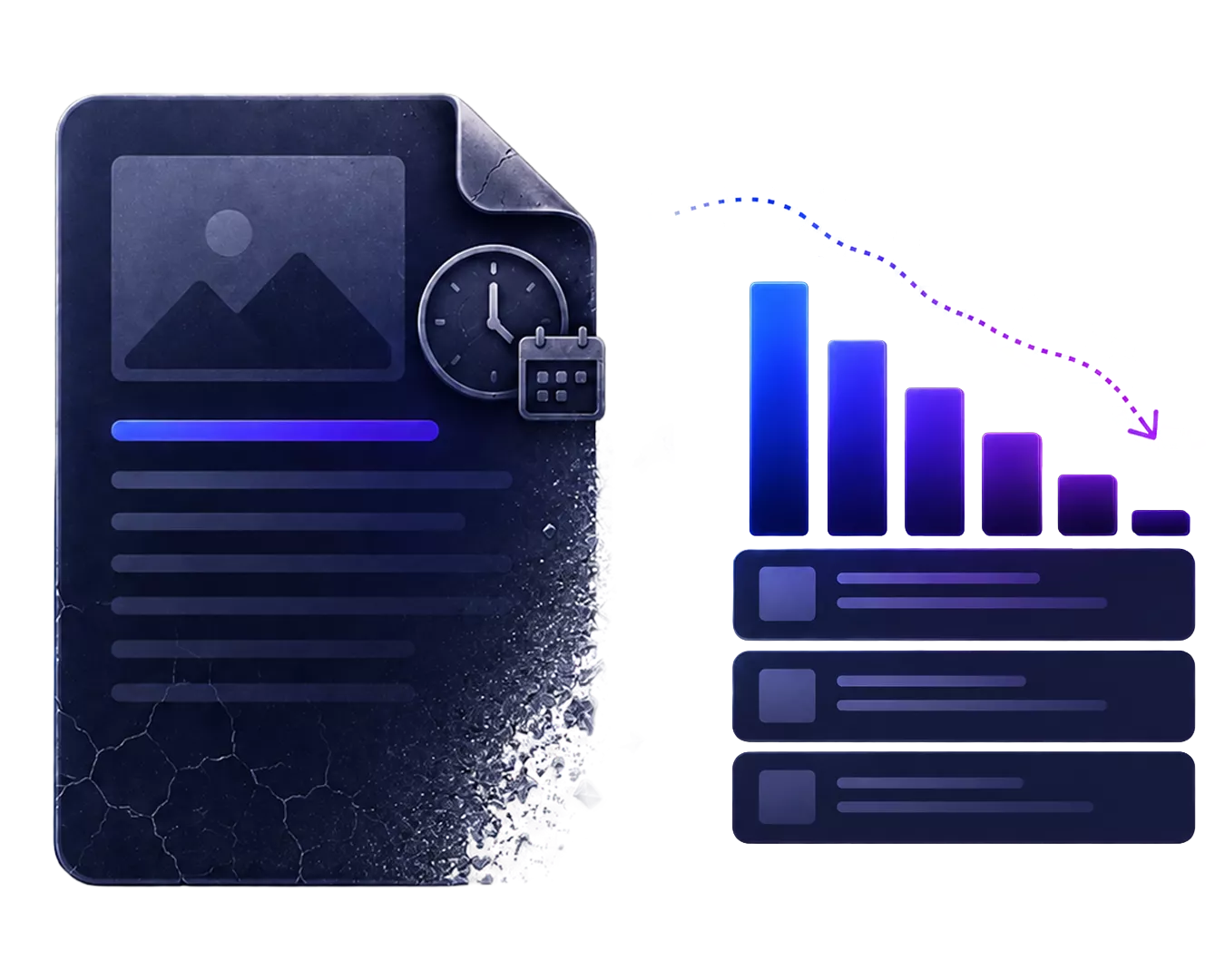
Content doesn’t age like fine wine. It ages like milk. What was accurate when you published that comprehensive guide two years ago might be completely wrong today. And Google notices.
Key Takeaways
- Outdated content hurts rankings because Google prefers current, accurate information
- AI systems avoid inaccurate sources, making freshness even more critical with AEO and GEO
- Prioritize high-traffic pages since updates there have the biggest impact
- Automation saves time because manual audits don’t scale with hundreds of articles
The Hidden Cost of Outdated Information
Every piece of outdated information in your content is a small crack in your credibility. These cracks compound over time:
- Statistics from 2021 make your 2025 readers question everything else you’ve written
- Discontinued products still listed as “recommended” frustrate users
- Changed pricing leads to angry customers and support tickets
- Outdated regulations can even create legal liability

Quick Tip: Create a list of your top 10 traffic pages and audit these first. The impact is greatest there, and you'll quickly identify which types of information tend to become outdated most frequently.
How Search Engines View Freshness
Google’s algorithms have become increasingly sophisticated at evaluating content freshness. The search engine uses multiple signals:
1. Query Deserves Freshness (QDF)
QDF (Query Deserves Freshness) is a Google algorithm that favors recent content for certain search queries. When many users suddenly search for a topic (for example, breaking news or new product releases), Google recognizes this trend and preferentially shows freshly published or recently updated content. For you, this means: For time-sensitive topics, a quick update to your articles can provide a real ranking advantage.
2. Content Decay Signals
Google observes how your pages perform over time. As Search Engine Land explains, pages that haven’t been updated for a long time may gradually lose rankings. This doesn’t happen overnight, but slowly over months.
3. User Behavior
When visitors land on your page, find outdated information, and immediately bounce back to Google, it sends negative signals. According to Google’s ranking systems documentation, this high bounce rate signals to Google that your content no longer delivers what users expect.
The AI Citation Factor
Here’s what most content teams don’t realize yet: AI systems like ChatGPT and Perplexity are increasingly citing web sources. These systems prioritize:
- Content with verifiable, current data
- Sources that demonstrate accuracy
- Pages that are regularly maintained
If your content contains outdated information, AI systems will learn to avoid citing you. This significantly reduces your visibility in this new frontier of search.
Good to Know: AI systems like ChatGPT regularly update their training data and web indexes. Outdated information on your site can lead to you being classified as an unreliable source and no longer being cited in answers.
A Practical Approach to Content Freshness
Manually reviewing every article isn’t scalable. Our detailed guide to content refresh strategy walks you through the complete process. Here’s a smarter approach at a glance:
1. Prioritize High-Traffic Pages
Focus your audit efforts on pages that drive the most traffic. A single correction on a high-traffic page has more impact than updating ten low-traffic articles.
2. Identify Time-Sensitive Content Types
Some content ages faster than others:
- Statistics and data points
- Pricing information
- Product comparisons
- Regulatory content
- “Best of [Year]” articles
3. Automate Detection
Tools like CiteRanger can scan your content and automatically identify potentially outdated claims. This saves hours of manual review and ensures nothing gets overlooked.
4. Create an Update Schedule
Rather than waiting for problems, proactively schedule reviews:
- Quarterly: Content with statistics and prices
- Bi-annually: Product comparisons and recommendations
- Annually: Evergreen educational content
Quick Tip: Add recurring calendar reminders for content reviews. Quarterly reviews for your most important pages are often enough to catch the biggest issues before they impact your rankings.
The Bottom Line
Content freshness isn’t just about SEO. It’s about maintaining trust with your readers. In an age where misinformation is rampant, being a reliable source of accurate information is a real competitive advantage.
Start by auditing your highest-traffic pages, and build systems to catch outdated information before your readers (or Google’s algorithms) do.